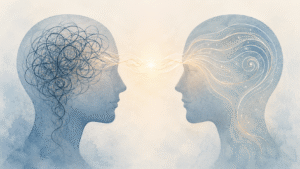

Identity change is one of the most profound psychological shifts a woman can experience, and it often emerges during major life transitions. Whether it’s motherhood, divorce, career change, or a combination of these, these experiences can stir emotional upheaval, self-doubt, and a deep questioning of who we are now versus who we once were. Understanding the psychology of identity change is essential for navigating these intense periods with strength, grace, and self-compassion.
Identity Change Psychology: Why Transitions Feel So Hard
Identity change psychology shows us that our sense of self is built on roles, relationships, routines, and deeply held values. When one or more of these pillars shifts, our internal world shifts too.
Divorce dissolves a role and a relationship.
Motherhood reshapes values, routines, and priorities.
Career changes affect competence, belonging, and purpose.
These shifts create what psychologists call identity dissonance – the uncomfortable space between who we were and who we are becoming. It can feel unsettling, even frightening. But it’s not a sign that something is wrong; it’s a signal that you’re in the sacred process of transformation.
Like the mythical phoenix, which burns and rises anew from its own ashes, identity change invites a form of rebirth. The old self must release, often painfully, for a new, stronger, more authentic self to emerge. And just like the phoenix, this process takes time, courage, and resilience.
Identity Change in Women Through Motherhood
Motherhood brings one of the most celebrated yet challenging identity shifts. Entering motherhood often collides with:
- Loss of autonomy
- Career or work identity changes
- Pressure to be endlessly nurturing
- Fatigue and emotional overwhelm
Identity change psychology reminds us that becoming a mother doesn’t erase who we were – it transforms and expands her. The woman you were before children now learns to integrate her past self with her new self. This integration, like the phoenix’s rebirth, requires patience and tenderness.
Identity Change and Career Transitions in Women
Career changes – whether by choice or circumstance – profoundly affect identity. Work provides structure, social connection, and purpose. When this shifts, women may experience:
- Fear of instability
- Anxiety about proving themselves
- Grief for the professional identity they built
Yet career transitions also carry the potential for rebirth. Like a phoenix, women stepping into new careers have the opportunity to discover new strengths, explore passions, and redefine what success means for them personally.
Identity Change in Women After Divorce
Divorce triggers one of the most intense forms of identity change. Even when a relationship has been difficult, the ending of a marriage disrupts familiar roles: wife, partner, co-parent, shared decision-maker, part of a couple. This loss is not only emotional but deeply psychological.
Women often ask themselves:
- Who am I without this relationship?
- What kind of future do I want now?
- How do I rebuild the self I lost or never fully knew?
Divorce can feel like an emotional fire, burning away the known. But within this fire lies opportunity: the chance to rise from the ashes with clarity, resilience, and renewed purpose.
Why Identity Transitions Trigger Unhealthy Coping
During periods of identity change, the nervous system seeks comfort. Many women turn to:
- Easily accessible food
- Emotional eating
- Scrolling or distraction
- Overworking or over-controlling
- Avoidance or retreat
These strategies are understandable. They soothe temporarily while your inner self adjusts. But relying on them exclusively can prolong discomfort, making it harder to fully embrace the transformation at hand.
Building Emotional Resilience During Identity Change
Emotional resilience is the ability to tolerate discomfort, uncertainty, and transformation without falling into old, unhelpful patterns. Like the phoenix, resilience allows us to endure the burn and emerge stronger.
Here are strategies to cultivate emotional resilience:
1. Name and Acknowledge Your Feelings
Labelling your emotions creates clarity. Recognise the fear, grief, or excitement accompanying identity change. This awareness is the first step toward transformation.
2. Challenge Inner Narratives
Identity change triggers self-doubt: ‘I’ll never feel like myself again’, ‘I don’t know who I am.’ Learn to question these thoughts gently, like guiding a child – they are not truths but signals of growth.
3. Strengthen Your Support Network
Change is easier when you don’t go it alone. Coaches, therapists, friends, and mentors offer guidance, grounding, and a safe space to explore your evolving self.
4. Build Grounding Rituals
Daily routines – movement, journaling, meditation, or mindful rituals – create stability, helping the psyche reorganise as your identity shifts.
5. Practice Self-Compassion
Transformation is messy. Growth is uncomfortable. Allow yourself to rise gradually, like the phoenix, from the ashes of your old roles and self-limiting beliefs.
Professional Support Can Be Essential
Identity transitions are not weaknesses – they are natural human experiences. Working with a therapist or coach provides:
- Tools to regulate emotions
- Safe space to explore identity
- Guidance through grief, fear, or uncertainty
- Strategies to replace unhealthy coping
- Clarity around values and priorities
Support accelerates transformation. It allows you to burn brightly and intentionally, without being consumed by the fire.
Embracing Your Phoenix Moment
Identity change in women is not a crisis – it’s a rebirth. It’s confusing and uncomfortable. It shakes the ground beneath your feet. But like the phoenix, this fire is necessary to emerge renewed.
Through divorce, motherhood, or career reinvention, every ending contains the seed of a beginning. By embracing emotional resilience, healthy coping strategies, and professional support, you can navigate the ashes with grace – and rise into the radiant, empowered woman you are meant to become.
You are allowed to transform. You are allowed to let the old self go. And you are allowed to fly.